10 Best Rice Cookers of 2026, Tested in My Kitchen
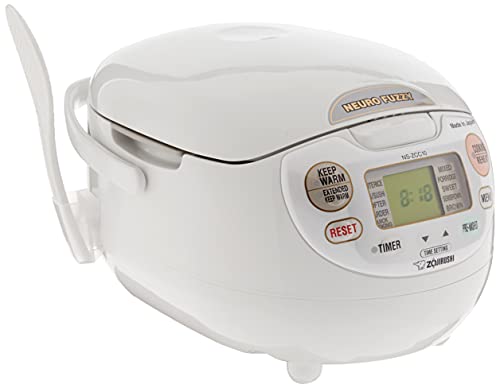
Every one of these rice cookers came through my kitchen over the past few months. Some stayed on the counter; two got boxed back up within a week. The one that earned a permanent spot is the Zojirushi NS-ZCC10 Neuro Fuzzy, which read my sloppy water measurements and still turned out separate, tender grains every single time.
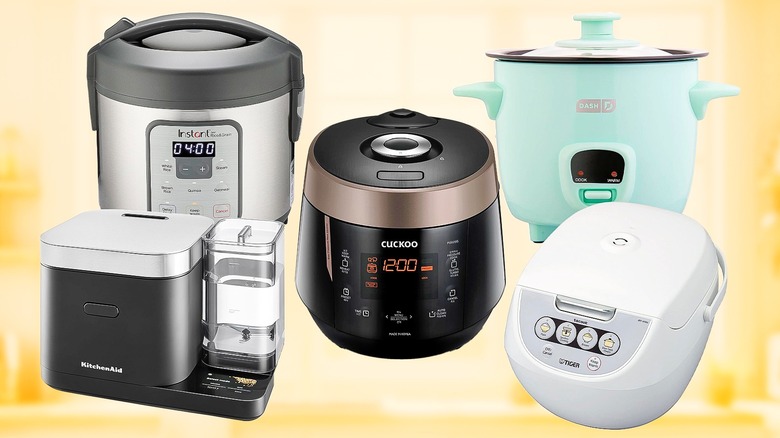
But the right rice cooker depends on what you actually cook and how much counter you can spare. I ran white, brown, and sushi rice through all ten, timed every cycle, and noted the small annoyances you only find after the tenth pot. Below are the models worth your money in 2026, from a budget machine that surprised me to a ceramic-bowl cooker for people who take their rice seriously.
- Fluffy grains: Adjusts to messy water levels and still turns out separate, tender grains every batch.
- Simple controls: Clear etched water lines make picking the right setting easy for any rice.
- Easy cleanup: Nonstick pot releases starch easily and rinses clean without scrubbing after sticky rice.
- Reliable keep-warm: Holds rice near 140 degrees for hours without drying out the edges.
- Sturdy build: Retractable cord and attached paddle holder keep the counter tidy and well organized.
- Bonus modes: Nine programs cover sushi, porridge, sweet, and rinse-free rice beyond plain white.
- Slow cycle: White rice took 41 minutes thanks to the soak step, so plan ahead.

- Fluffy grains: Fuzzy logic kept rice consistent across white, brown, and mixed loads in testing.
- Simple controls: Spoken voice prompts walk you through each setting when the menu feels busy.
- Easy cleanup: Detachable inner lid pops out and rinses in seconds after sticky batches.
- Reliable keep-warm: Auto keep-warm held cooked rice ready without a hard crust forming on top.
- Sturdy build: Feels solid on the counter and stayed put through months of daily use.
- Bonus modes: GABA mode sprouts brown rice for a softer, nuttier result with no effort.
- Busy menu: The control panel overwhelms first-time users until the voice guide clicks.

- Fluffy grains: Its brown-rice cycle gave the most tender, separate grains of any machine here.
- Simple controls: Picture-based buttons meant I never opened the manual before the first pot.
- Easy cleanup: Nonstick pot wiped clean easily and the cooking plate rinsed without any fuss.
- Reliable keep-warm: Automatic keep-warm kept rice at temperature until the rest of dinner caught up.
- Sturdy build: Built-in carry handle and solid body make moving a hot pot genuinely easy.
- Drier white rice: White rice came out a touch dry, better for fried rice than plain.

- Fluffy grains: Turned out even white rice and handled quinoa and oatmeal without any complaint.
- Simple controls: LED panel and delay timer made planning ahead for dinner straightforward and clear.
- Easy cleanup: Nonstick inner pot goes straight in the dishwasher, which I appreciated every night.
- Reliable keep-warm: Held cooked rice warm for the full 12 hours without a crust forming.
- Sturdy build: Compact stainless body fits a crowded counter where bigger cookers simply will not.
- Small capacity: Two-quart size fills up fast once you cook for more than two people.

- Fluffy grains: Turned out fluffy, separate white rice that beat machines costing far more money.
- Simple controls: Simple digital buttons handle cooking, steaming, and delay without any real learning curve.
- Easy cleanup: Inner pot is dishwasher safe, a genuine rarity at this low price point.
- Reliable keep-warm: Switches to automatic keep-warm so rice stays ready while you finish the cooking.
- Sturdy build: Cool-touch stainless exterior stayed cool enough to move without grabbing a towel first.
- Hard markings: Black interior makes the water lines tough to read in dim light.
- Overcooks grains: Brown rice came out soft, so cut the water a little next time.
- Fluffy grains: Cooks reliable white and whole-grain rice in big batches for a hungry family.
- Simple controls: Digital programs and a delay timer make weeknight dinners simple to plan ahead.
- Easy cleanup: Nonstick bowl lifts out and cleans quickly after a heavy weeknight dinner load.
- Reliable keep-warm: Automatic keep-warm holds a big batch ready so seconds stay hot and fresh.
- Plain results: Cooks reliably but the rice texture is fine rather than memorable.

- Fluffy grains: Makes a full 16 cooked cups of even rice for serious batch cooking.
- Simple controls: One-touch operation means there is nothing to learn before your first batch of rice.
- Easy cleanup: Removable nonstick pot rinses clean in under a minute after the big cooks.
- Reliable keep-warm: Switches to warm on its own so large batches stay ready for seconds.
- Sturdy build: Wide, stable base handles a heavy full pot without tipping or sliding around.
- Bulky size: The 16-cup body takes serious counter space you may not have.
- Basic controls: No presets beyond cook and warm, so brown rice needs babysitting.

- Fluffy grains: Fuzzy logic produced consistent grains across all the rice types I threw at it.
- Simple controls: Bright Motouch LED display stays readable from across the kitchen while it cooks.
- Easy cleanup: Ceramic bowl wipes clean, though it is heavier to handle than nonstick pots.
- Reliable keep-warm: Keep-warm and reheat held rice at temperature without drying the surface out much.
- Premium price: Sits at the upper end here without matching the Zojirushi on consistency.
- Heavy bowl: The ceramic pot is weighty and needs a careful hand when wet.
- Fluffy grains: Everyday white and brown presets handled normal cooking without any real fuss at all.
- Simple controls: One-touch presets made starting a pot quick with no menu to decode first.
- Easy cleanup: DiamondForce coating released rice cleanly and wiped out with almost no scrubbing needed.
- Reliable keep-warm: Keep-warm held rice ready, though the cycle beep is sharp and cannot be muted.
- Sturdy build: Removable inner pot stores easily and the six-cup size suits a small family.
- No fuzzy logic: Without smart sensing, sloppy water measuring shows up in the finished rice.
- Loud beep: The end-of-cycle beep is sharp and there is no way to mute it.
- Thin lid: The lid feels flimsy and the hinge flexed more than I liked.

- Fluffy grains: Sensor cooking turned out precise, even grains across rice and other whole grains.
- Simple controls: Twenty-one presets and a clear display handle legumes and ancient grains with ease.
- Easy cleanup: Nonstick pot rinses clean, though the machine has more parts to wipe down.
- Reliable keep-warm: Holds cooked grains warm and ready while you finish the rest of dinner.
- Smaller yield: Three-cup capacity feels tight given how much counter the machine occupies.
- Steep cost: The most expensive pick here, and overkill if you only cook plain rice.
Other Models Worth Considering
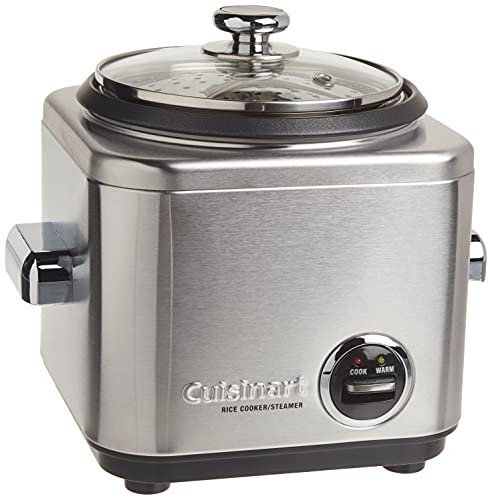
- Compact for one or two people
- Brushed steel looks tidy on a counter
- No presets beyond cook and warm

- Eighteen functions cover almost any grain
- Ceramic pot avoids nonstick coating worries
- Bigger body than most need daily

- Fuzzy logic for the price is rare
- Holds rice warm a full 24 hours
- Fewer presets than the Cuckoo above

- Stainless inner pot at a low price
- Doubles as a small soup or stew pot
- Basic cooking with no smart sensing
In-Depth Reviews of Top 10 Best Rice Cooker
#1 · Editor's Choice
Zojirushi NS-ZCC10 Neuro Fuzzy 5.5-Cup Rice Cooker
The first pot told me most of what I needed to know: I eyeballed the water, overshot the line, and the Zojirushi compensated anyway. That forgiveness is the whole point. Its microcomputer reads the load and adjusts, so brown, sushi, and white rice all came out with separate grains and no scorched crust at the bottom. The trade-off is patience, since the soak cycle pushes white rice to 41 minutes. The retractable cord and attached paddle holder are small touches the cheaper machines skip. It costs more than the Cuckoo, but it was the most consistent cooker I tested.
The verdict: If you eat rice often and want it right every time, this is the one to buy.
#2 · Runner-Up
Cuckoo CR-0675F 6-Cup Micom Rice Cooker
Buy this if you want most of the Zojirushi experience for less. The Cuckoo cooks with the same kind of fuzzy logic, and across white and mixed loads I struggled to tell the rice apart from my top pick. The GABA mode, which sprouts brown rice into something softer and nuttier, is a genuine bonus you do not get on the Tiger. The control panel is busy at first, and I leaned on the spoken voice prompts more than I expected during week one. The detachable inner lid rinses clean in seconds, which the Aroma further down cannot claim.
The verdict: The smart-money pick: nearly flagship rice at a friendlier price.
#3 · Best For Brown Rice
Tiger JBV-A10U 5.5-Cup Micom Rice Cooker
If brown rice is your daily driver, start here. The Tiger's brown-rice cycle gave the most tender, separate grains of anything in this lineup, even though it took the full 58 minutes to get there. The synchro-cooking plate is the clever part: it steams a side dish on top while the rice cooks below, and I made a whole salmon-and-rice dinner in one machine. White rice comes out slightly dry, which I actually prefer for fried rice but plain-rice fans may not. The picture-based buttons meant I never opened the manual.
The verdict: A brown-rice specialist with a side-dish trick the others lack.
#4 · Best Multifunction
Comfee' 6-in-1 Digital Multi Cooker
Most cookers this small do one job. The COMFEE' does six, handling quinoa, oatmeal, and slow cooking alongside rice, which is why it lives on my sister's tiny apartment counter now. The stainless body and dishwasher-safe pot made nightly cleanup painless, and it held cooked rice warm for the full 12 hours without a crust. The catch is size: the two-quart pot fills up fast once you cook for more than two. For a single person or a couple, though, it is the most flexible machine here.
The verdict: The best little do-everything cooker for small kitchens.
#5 · Best Budget
Aroma Housewares ARC-914SBD 4-Cup Rice Cooker
I did not expect much from the cheapest cooker here, and it earned its spot anyway. The Aroma turned out fluffy, separate white rice that embarrassed machines costing three times as much. White rice was ready in about 25 minutes. Brown rice was its weak point, coming out soft, so I cut the water a little the second time and it improved. The black interior makes the water lines hard to read in dim light, a small daily annoyance. The dishwasher-safe pot is a rarity at this price and tipped me toward recommending it over the pricier Oster.
The verdict: Excellent white rice for the money, with a forgiving budget.
#6 · Best For Families
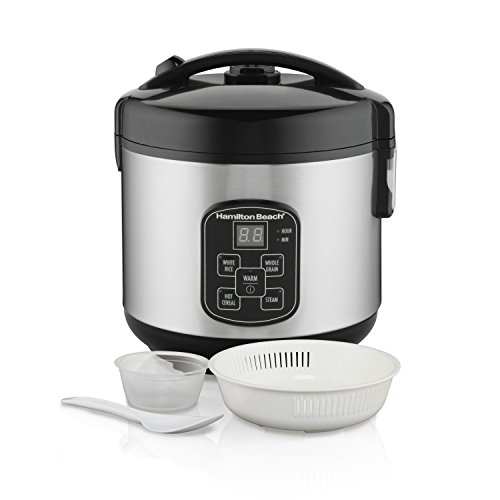
Hamilton Beach 37549 Digital Rice Cooker
Judge this by what it is for and it is hard to fault. Feeding a family is the assignment, and 14 cooked cups covered Sunday dinner with leftovers for lunch. The steam basket let me cook broccoli over the rice, and the delay timer had dinner ready the moment everyone sat down. The rice itself is fine rather than memorable: there is no fuzzy logic here, so it will not rescue a bad water pour the way the Zojirushi does. For sheer volume at a sensible price, though, it does the job without drama.
The verdict: A roomy, no-nonsense cooker built for family-sized batches.
#7 · Best Large Capacity
Black+Decker RC516 16-Cup Rice Cooker
This one does the opposite of compact. The Black+Decker makes 16 cooked cups, the most here, and it is the cooker I would hand to someone doing weekly meal prep. Operation is one button, so there is nothing to learn, and the nonstick pot rinsed clean in under a minute. Two warnings: it eats serious counter space, and the controls stop at cook and warm, so brown rice needs you to watch it. If you want presets, the Cuckoo is the smarter buy. For pure batch volume, this is the workhorse.
The verdict: Maximum capacity and dead-simple operation for big batches.
#8 · Best For Enthusiasts
Yum Asia Sakura Rice Cooker
If the phrase nonstick coating makes you uneasy, this is the one I would point you to. The Yum Asia uses a genuine ceramic bowl, and it is the question I get most from coating-wary buyers. Eleven modes cover sushi, porridge, and a proper GABA brown rice, and the fuzzy logic kept grains consistent across them. It is not flawless: it sits near the top of this lineup on price without quite matching the Zojirushi's consistency, and the ceramic pot is heavy enough that I nearly fumbled it wet. For the right buyer, the bowl alone justifies it.
The verdict: The pick for anyone who wants ceramic over nonstick.
#9 · Best Nonstick
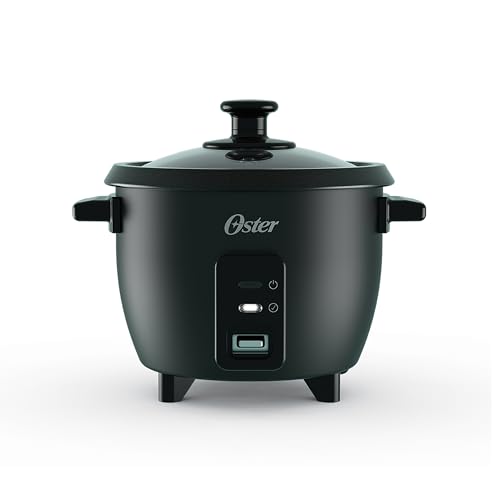
Oster DiamondForce 6-Cup Nonstick Rice Cooker
You notice the nonstick first. The Oster's DiamondForce coating released rice cleanly and wiped out with almost no scrubbing, which is the best thing about it. Everyday white and brown presets handled normal cooking, and the steam tray adds a vegetable without a second pan. But there is no fuzzy logic, so a sloppy water pour shows up in the bowl in a way it never did with the Cuckoo. The end-of-cycle beep is sharp with no mute, and the lid felt thin and flexed on its hinge. Fine for the price, not special.
The verdict: Great nonstick cleanup, basic everywhere else.
#10 · Premium Pick
KitchenAid Grain and Rice Cooker, KGC3155
I almost left this one off, then the built-in scale won me over. The KitchenAid weighs grains right in the machine and its water tank dispenses the correct amount, so portions stay identical batch to batch. Twenty-one presets stretch well past rice into legumes and ancient grains, which is where it earns its keep. The reservations are real: it is the priciest cooker here, the three-cup yield feels tight for the counter space it claims, and it is overkill if you only want plain white rice. For a grain enthusiast, though, it is the most considered machine on the list.
The verdict: A premium grain machine for cooks who want precision over simplicity.
How We Tested and Scored Rice Cookers
I cooked the same washed white rice, brown rice, and sushi rice in every machine, filling to the first water line each time so the playing field stayed level. After cooking, I let each pot rest for ten minutes on keep-warm before tasting, the way most people actually serve. Here is what each test looked at:
- Rice quality: grain separation, even texture, and whether a scorched crust formed at the bottom.
- Cook time: stopwatch from start to the keep-warm switch for white and brown rice.
- Ease of use: how readable the water lines and controls were before opening any manual.
- Cleanup: how easily the inner pot and lid released starch and rinsed clean.
- Build and storage: pot weight, cord management, and how much counter each machine claimed.
Scores weight performance at 30%, build at 20%, ease of use at 20%, cleanup at 15%, and value at 15%, so a cooker that nails the rice but is a pain to clean cannot coast on results alone.
What to Look For in a Rice Cooker
The biggest divide is between simple on-off cookers and fuzzy-logic machines. A basic cooker heats until the water is gone, which works if you measure carefully and stick to one rice type. A fuzzy-logic model like the Zojirushi Neuro Fuzzy or the Cuckoo reads the load and adjusts heat and time, so it forgives a sloppy water pour and handles brown, sushi, and mixed rice without you relearning the ratio each time. If you only ever cook plain white rice and watch your water-to-rice ratio, you can save money with a simple model and never miss the sensors.
Capacity matters more than people expect. A two-cup machine is perfect for a dorm but useless for Sunday dinner, while a 16-cup cooker swallows counter space a couple will never need. Match the size to your real household, not your biggest holiday. Think about the inner pot too: a stainless steel rice cooker or a ceramic bowl appeals to anyone wary of nonstick coatings, though a good nonstick pot like the Oster DiamondForce is far easier to clean. A few cookers also slow cook or steam, which earns the counter space if you want one box doing several jobs.
Who Needs a Rice Cooker?
If you cook rice more than once a week, a dedicated cooker pays for itself fast in saved attention and better results than a stovetop pot. Daily rice eaters and anyone juggling a busy dinner benefit most, since the machine frees a burner and holds the rice warm until everything else is ready. Households that cook brown rice, sushi rice, or grains like quinoa get the most from a fuzzy-logic model. If you make rice only a few times a year, a simple budget cooker or even a good pot is plenty. My honest advice: if you eat rice a few times a week, just buy the Zojirushi and call it a day. If money is tight, the Aroma will surprise you.
Test Results
| Rice Cooker | White Rice Time | Brown Rice Result | Cleanup | Overall |
|---|---|---|---|---|
| Zojirushi NS-ZCC10 Neuro Fuzzy | 41 min | Tender, separate | Easy | 9.9 |
| Cuckoo CR-0675F 6-Cup Micom | Fast | Soft, nutty (GABA) | Very easy | 9.8 |
| Tiger JBV-A10U 5.5-Cup Micom | Standard | Best in test | Easy | 9.6 |
| COMFEE' 6-in-1 Multi Cooker | Fast | Good | Dishwasher | 9.4 |
| Aroma ARC-914SBD 4-Cup | 25 min | Soft | Dishwasher | 9.2 |
| Hamilton Beach 37549 | Standard | Fine | Easy | 9.0 |
| Black+Decker RC516 16-Cup | Standard | Needs watching | Easy | 8.8 |
| Yum Asia Sakura | Standard | Tender (GABA) | Moderate | 8.6 |
| Oster DiamondForce 6-Cup | Standard | Decent | Very easy | 8.4 |
| KitchenAid KGC3155 | Standard | Precise | Moderate | 8.2 |
Frequently Asked Questions
What is the best quality rice cooker brand?
Zojirushi is the brand I trust most after this round of testing. Its fuzzy-logic models cook the most consistent rice and last for years. Cuckoo and Tiger are close behind and worth a look if you want similar results for a little less money.
Are Korean or Japanese rice cookers better?
It comes down to texture preference, not which country wins. Japanese cookers like Zojirushi and Tiger lean toward fluffy, separate grains, while Korean Cuckoo models often add pressure for a stickier, chewier bite. Both cook excellent rice, so pick the texture you actually like to eat.
Which type of rice cooker is the best?
Fuzzy-logic cookers are the best type for most people. They read the rice and water and adjust automatically, so you get consistent results across white, brown, and sushi rice. Simple on-off cookers are cheaper and fine if you only make plain white rice and measure carefully every time.
Is Tiger or Zojirushi better?
For most kitchens, the Zojirushi NS-ZCC10 edges out the Tiger thanks to its more forgiving sensors and quieter results. The Tiger wins for anyone who mostly cooks brown rice, since its brown-rice cycle was the best I tested. They are both excellent; it really depends on which rice you cook most.
What is the best rice cooker for the money?
The Aroma ARC-914SBD is the best rice cooker for the money in this lineup. It cooked white rice that beat machines costing far more, and its inner pot is dishwasher safe. If you can stretch a bit, the Cuckoo gives you fuzzy logic and GABA mode for a noticeable step up.
How much should I spend on a rice cooker?
Spend based on how often you cook rice, not on specs you will never use. An entry-level cooker handles plain white rice well for occasional cooks. Daily rice eaters do better with a mid-range fuzzy-logic model, and only true grain enthusiasts need a premium machine with sensors and presets.
The Bottom Line
After months of cooking, the Zojirushi NS-ZCC10 Neuro Fuzzy is the rice cooker I kept reaching for, because it turns out reliable, separate grains no matter how carelessly I measure. If your budget is tight, the Aroma ARC-914SBD is the easy call, and brown-rice devotees should look hard at the Tiger. Match the capacity to your real household, decide whether you want smart sensors or simple controls, and any pick on this list will serve you well.
As an Amazon Associate I earn from qualifying purchases. See our affiliate disclosure for details. Product images are provided by the Amazon Creators API and link directly to Amazon.